

This is a brand new ART lens from Sigma – designed especially for mirrorless cameras and it comes in Sony-E (this one) and for L-mount for Sigma and Panasonic cameras.
This lens is coming on the market straight after the smaller and lighter new 85mm and it’s following in the same suit
It is NOT usual Sigma, huge and heavy lens.
I must say massive thanks to Sigma UK for lending me this lens for this review but I am however, not paid by Sigma or anyone else to say anything specific about it, so it is my honest and un-biased opinion about it.
PERFORMANCE
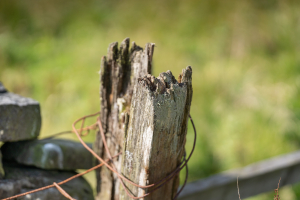
This lens is good and I mean high end good. The quality of images it delivers is just outstanding. This is not just “another” lens for your Sony camera. This is in my opinion as good if not better than what Sony has got to offer …
Yes, I am talking about the legendary now Sony 90mm f2.8 macro lens which I absolutely love and which is one of my favourite lenses of all time.
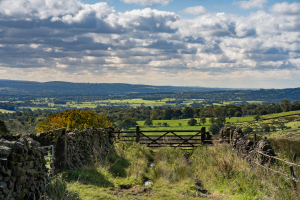
Sigma really delivers here … very sharp, amazing auto focus, eye tracking just works, great colour and contrast. Literally no chromatic aberration and it is one of those lenses that gives more and more every time you use it.
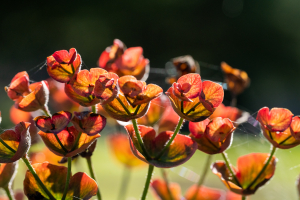
It is obviously 1:1 macro and it is good at being macro but it is also great for pretty much every type of every day photography as well.
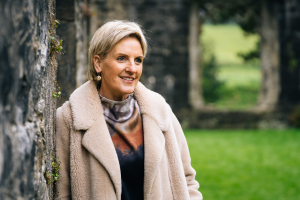
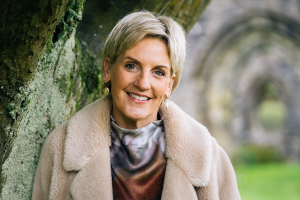
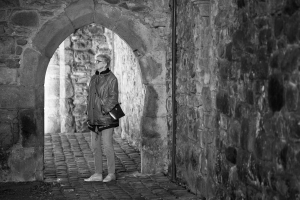
It is also great focal length for portraits.
105mm focal length creates lens compression which in effect creates shallower depth of field and even though it is only f2.8, it is capable of producing really nice separation between your subject and the background. Also the bokeh this lens creates has got bags of character and really nice look to it.
F2.8 however is really irrelevant when shooting macro with it. Focusing this close with it creates really shallow depth of field so unless you close the aperture to f8 or smaller you will need to stack multiple photos together in post to get just enough sharpness through out when shooting at macro magnifications but don’t get me wrong, the depth of field will be very shallow at all apertures when getting this close to your subject.
Because of this even smallest focus adjustments might be more difficult for auto focus, no matter what camera you are using.
Even though this lens is very good at auto focusing, manual focusing is the best way to get the sharpness in the right place when shooting macro and this is true with all macro lenses in my opinion and not just this one.
Need to mention that it also supports Direct Manual Focus (DMF) which enlarges the focusing point on the screen and in a view finder to make manual focusing easier.
When it comes to auto focusing, you just have to remember that by design this lens has got really long focus travel – auto focusing from one end of it to the other will never be mega quick, not even with the focus distance limiter which I will talk about in a moment and especially not with video but it does work well and I literally had no issues focusing doing general photography and even with video when it doesn’t have to travel from macro to the infinity as it won’t do it quickly – that’s how it is.
Overall, I think the auto focusing is better here than with Sony’s 90mm. Not surprising really as the Sony lens is 5 years old now and this has been designed with modern mirrorless cameras in mind.














All images © Copyright Pav SZ - All right reserved
BUILD
It is relatively small comparing to other Sigma ART lenses.
133mm long, weighing 715 gramms and it has got 62mm filter thread. It’s less bulky than many other Sigma lenses and it has several switches and buttons.
Standard auto/manual switch, focus, exposure lock which can be programmed to a lot of other functions via the camera.
Focusing distance switch which I have mentioned earlier – this is to speed up the auto focusing. The focus travel distance on lenses like this is very long. There is a long way for the focus to travel from the closest possible distance, macro in this case to infinity. So if you were shooting macro and then decided to shoot something few meters away from you – the auto focus will have hard time to move from one end to the other. This is when the focus limiter comes in – it cuts the focus travel by half pretty much. So you have Full mode switch position, half a meter to infinity and 0.295m, the minimum focusing distance, to 0.5 meters – each of those positions switched on will make the auto focusing faster and more accurate.
On the other side of the lens there is aperture ring lock – locked in A mode the aperture can be controlled by the camera but when unlocked and turned the aperture can be controlled by the ring on the lens. This is also supported by another switch to have the aperture clicking on or off.
I guess this is more to cater for different photographer’s tastes than actually to make the aperture changes smoother when filming but it’s here for whatever reason you might need to de-click the aperture ring for.
There is no optical stabilisation on and off switch as this lens has got NO build in stabilisation and relies on camera’s internal IBIS – this will vary from camera to camera but I had literally no problems using it on a7III and managed to get sharp images and jitter free video hand held.
The lens has also got weather sealing and it’s splash and dust proofed.
VALUE
It will be retailing for £699 here in UK, not much cheaper than the Sony 90mm but it is cheaper.
If you are budget conscious and you want to save a penny or two then Sigma is a great choice.
After shooting with it for awhile, I think it is a very high quality lens and it is actually marginally better than Sony so it is really no brainer to save the money here, even if it is not much.
WHO IS IT FOR?
This is a very versatile lens. Maybe not suitable for indoor family portraits or real estate but great for pretty much everything else. I do like this focal length for portrait work but it does really shine for any type of close ups and of course macro.
The fact is that you can be shooting very fine and small details one moments and some landscape or portrait in the next makes it a really great choice and a great tool for many different situations.
1:1 macro magnification and outstanding sharpness make it really great choice for nature photography.
There is no build in optical stabilisation but … it’s not a deal breaker.
f2.8 wide aperture is fast enough for majority of real life situation and when shooting macro, with smaller apertures will require a tripod most of the time anyway. I didn’t find it a problem and I really had fun shooting with it.
Recent Comments