

I haven’t used a fully manual lens in a long time, so when Brightin Star reached out and asked if I wanted to try their new 50mm f/1.05, I honestly wasn’t sure at first.
Then I looked it up – and what really hooked me was the design. It’s got this proper Leica vibe: white and yellow markings, all-metal body, very old-school. And I’ve always had a soft spot for affordable lenses with character, so my curiosity won pretty quickly.
I’ll be honest – I wasn’t expecting miracles at this price. From experience, a lot of these ultra-fast, aperture lenses end up being more gimmick than anything else. They look impressive on paper, but wide open they’re often messy and hard to actually use. This one surprised me. Not only does it look great, it’s genuinely usable – and wide open it performs far better than I expected.This is a full-frame lens and it’s available for Sony E, Canon RF, Nikon Z, and L-mount.
I’m using the L-mount version here. All the samples you’re seeing in this video were shot on the Lumix S1II and this lens.
It’s a fully manual lens with no electronic contacts at all, so aperture and focus are controlled entirely on the lens itself. There’s no safety net here – it’s all on you. And yes, it’s harder to consistently nail critical focus compared to modern autofocus glass. But when you do land the shot, the satisfaction is on a completely different level. It slows the process down in a good way and makes shooting feel more deliberate, more involved, and honestly more rewarding than relying on an all-singing, all-dancing auto focusing lens.
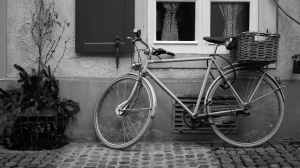
This 50mm has a strong vintage character – not just because it’s manual, but because of the way it renders images. The look has personality. What surprised me most is that it’s actually very sharp in the centre. Well, not even in the centre, more than the centre. I genuinely didn’t expect that at this aperture and price.It’s also much easier to shoot with than you might think. On the Lumix S1II, or any other full frame Lumix, when you press the focus mode button at the back, with a manual lens attached, the camera magnifies the image so you can check focus precisely. I also turn on focus peaking, which highlights sharp edges in colour, so you instantly see what’s in focus. Combined, it makes manual focusing incredibly intuitive and easy to do.
And this isn’t just a Lumix thing – Sony, Canon, Nikon… pretty much all modern mirrorless systems have similar tools now. Manual focusing today is nothing like it used to be. It’s faster, more accurate, and honestly more enjoyable than most people think.
Let’s talk about the 50 mm focal length in plain terms – what it actually does, why it’s such a staple in photography, and how it shapes your pictures when you’re out shooting.
At its core, a 50mm lens sits right in the middle of the classic “normal” range on a full-frame camera. That means the field of view it captures feels natural – not stretched, not compressed – very close to how our eyes perceive a scene without exaggeration or distortion.That’s why historically this focal length became known as the “standard” lens and that’s why it is perfectly suited for portrait, close-ups, architecture and everything in between.Because it doesn’t zoom, a 50mm prime forces you to think about your position and frame. You don’t zoom with the lens; you zoom with your feet, you have to physically move in or out, That constraint is good for learning composition.
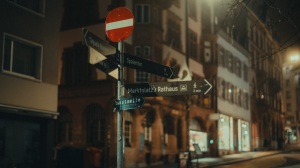
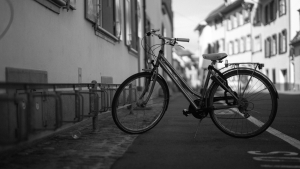
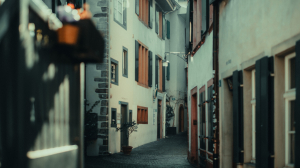
This 50mm gives you very nice shallow depth of field. That ultra wide aperture of f1.05 lets a lot of light in. It gives you really superb subject to background separation and bokeh.It’s good for picking out textures, moments within a scene, or subjects with context.I love using a lens like this for street photography. Not quick or stealthy, as you need to take time to nail that focus but results it gives can be stunning.
It’s not a perfect optically lens, far from it. Also f1.05 is so shallow that it is easy to miss the focus point and then blame it on the lens (USER ERROR). There is a lot of chromatic aberration wide open, some vignetting and the flares are just crazy wild but you know what? … it all doesn’t matter with a lens like this. Imperfections give the images that extra something and it’s not a lens you buy to have perfection.I guess it’s OK for filming with it. F1.05 might be less forgiving in video than when shooting photos with it. Used carefully and maybe not wide open all the time it can deliver that elusive “cinematic” look with ease. There is however fair amount of focus breathing visible and all the chromatic aberration and crazy flaring needs to be taken into the consideration when filming with it.Overall, totally usable for video if yo really have to film with it.
BUILD
This lens is built like a tank. The moment you pick it up you notice the weight. At 606g it feels heavy for a 50mm, almost like a small brick in your hand. It is all metal, no plastic anywhere here, and that immediately gives it a sense of durability and high quality. It has that Leica-inspired aesthetic with white and yellow markings.
The focus ring is ultra smooth with a long throw, which makes precise manual focusing much easier, especially at f1.05 where depth of field is razor thin, hairline thin. The aperture ring has this cool design and is just as smooth to operate. The aperture and distance markings are clearly printed and easy to read, which matters more than you think. Up front you get a standard 58mm filter thread, which is great because filters are cheap and easy to find in that size. There is no weather sealing here at all. It is a very simple, fully mechanical design with no electronics, no gimmicks, nothing hidden. Just glass and metal. And honestly, that simplicity is a big part of the appeal. It feels honest, straightforward, and that is exactly the kind of lens this is supposed to be.
PRICE
This is a budget-friendly, manual, ultra fast 50mm prime. It’s about $300 brand new. Not exactly dirt cheap, but for what it offers it’s genuinely well priced, and it looks fantastic as well.I’ve used a lot of these cheaper Chinese 50mm lenses over the years, and this one really stands out to me. The only serious competition in this space is the 7Artisans 50mm f1.05, which is an excellent lens as well, but it’s slightly bigger and only marginally cheaper.
What makes this such strong value for money is the combination of sharpness and that extreme aperture. If you’re happy to shoot manual and you like that vintage shooting experience, you’re getting a lens with real character that also delivers where it matters. It’s not just a novelty specs or gimmick. It’s actually usable.
CONCLUSION
I picked this lens up fully expecting it to fall apart wide open, and it genuinely surprised me. I love vintage lenses for their imperfections and character, but I don’t always love the baggage that comes with them. Fungus, haze, worn coatings… that romantic vintage look can come with real headaches. Personally, I prefer something new and clean like this.
I can mount it straight on my camera with no adapters, I get an f/1.05 aperture that would have been science fiction in the 70s or 80s, and yet the images have that high-end vintage feel.It reminds me physically and the image it produces to what you’d expect from very a expensive manual Leica lens. The difference is this costs a tiny fraction of what would Leica cost.
Once you figure out your focusing workflow and get comfortable with it, hitting focus becomes surprisingly reliable. An 80 to 90% success rate is very realistic, and that’s more than enough to confidently shoot with it in the real world situations.
I’d happily travel with this lens or use it as an everyday personal lens when I just want to shoot for fun. It has character, it’s engaging to use, and it delivers a look that feels somehow special.A beautiful, vintage-inspired 50mm. Recommended.




















Recent Comments